
Last updated: November 24, 2026
In This Article
- Why “Once a Year” Doesn’t Work Here
- The Two Timing Triggers That Matter Most
- What Happens During a Scheduled Yard Treatment
- What Time of Day Actually Matters
- Does Yard Location Change the Timing?
- Common Questions About Yard Spray Timing
- Watch and Listen
- If Your Yard Is Due for a Look
Quick Summary: There’s no single calendar date, because two triggers matter more than the season alone: a scheduled preventive visit that anticipates the rainy-season migration, and treating the moment a specific sign shows up instead of waiting for the next visit. Cape Coral’s climate doesn’t give lawns a true off-season, so “once a year” doesn’t hold up here the way it might further north.
Why “Once a Year” Doesn’t Work Here

A once-a-year application makes sense somewhere with a real winter, where cold weather knocks pest activity back to nothing for months. Cape Coral doesn’t get that reset. Lawn pests here stay active across most of the year, so a single spring application leaves the yard uncovered for the other three-quarters of the year.
The Two Timing Triggers That Matter Most
Two triggers decide when a yard needs treatment: one follows the calendar and the other follows what the lawn is showing. Lawn pest control schedules follow the first, and a call to Maximum Pest Control about a specific sign handles the second.
Seasonal: Before the Rainy Season Migration Starts
Heavy summer downpours push ants and other ground-dwelling pests up out of saturated soil and toward the nearest dry ground, which is often a foundation. Timing an application just ahead of this shift, instead of after the first wave has already reached the house, is what actually gets ahead of it. Cape Coral’s humidity breaks down standard treatments faster than a drier climate would, which is part of why the timing of the application matters as much as the product itself.
Reactive: The Moment You See Early Signs
A brown patch, a chewed blade pattern, or an ant trail doesn’t need to wait for a scheduled visit. The same logic that applies to calling an exterminator applies to yard treatment: the earlier a specific sign gets treated, the less there is to treat.
Pest-Specific Timing
Lawn pests do not all peak at the same time, so the right window also depends on what is in the yard. Chinch bugs do their damage in the hotter, drier, sun-exposed parts of a St. Augustine lawn, which is why a spring visit comes ahead of their season. Tropical sod webworms feed at night and can attack in the summertime. White grubs feed on the roots, and the damage often does not show until late summer or early fall, so a lawn that looks fine in July can still have a problem underneath. Mole crickets and other lawn pests each follow their own active period too, which is a big reason a one-time application rarely covers a whole year.
What Happens During a Scheduled Yard Treatment
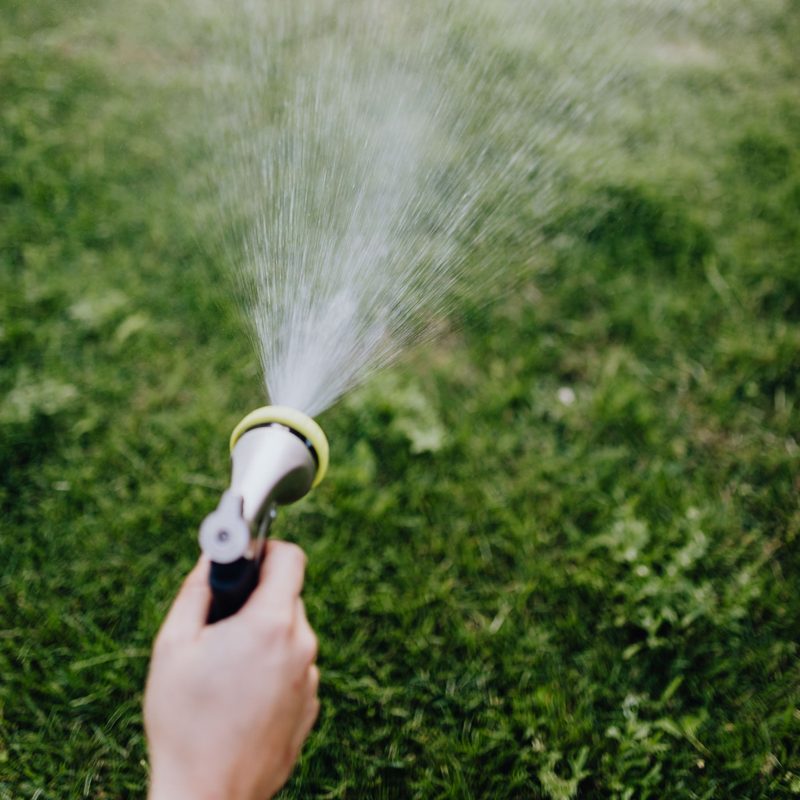
A scheduled visit is more than a spray pass. The technician decides how much of the yard to cover, which product fits the season, and whether conditions that day allow the application at all. Those three decisions are covered below, starting with where the product goes.
Perimeter or Full-Yard Application
Most scheduled visits treat the perimeter, the strip of lawn closest to the foundation and walkways, since that’s where the majority of pest pressure concentrates. A full-yard application is used when activity has already spread past the perimeter, or for a specific pest like chinch bugs that showed up mid-lawn.
Product Selection Changes by Season
The product used in a spring visit, ahead of chinch bug season, isn’t the same as the one used heading into the rainy season migration, when ants and ground-dwelling pests are the bigger concern. A technician working from a scheduled plan adjusts the product to the season instead of repeating the same application all year.
What Gets Checked Before Spraying
Wind, recent rainfall, and whether anyone is planning to use the yard that day all factor into the actual application, along with the calendar date. A technician who shows up on the scheduled day but skips the yard because conditions are wrong is doing the job correctly.
What Time of Day Actually Matters
Timing is about the hour as well as the season. Heat, sun, and afternoon storms all change how long a treatment has to settle before conditions work against it. Two factors matter most here: when in the day the application happens, and what the forecast says about rain.
Early Morning or Late Afternoon, Away From the Heat
Applying in the early morning or the late afternoon, away from the midday heat, gives a treatment more time to settle before it breaks down in direct sun. Which of the two fits better depends on the day: a morning application can get ahead of an afternoon downpour, while a late-afternoon one can suit a dry forecast and calm air. Either way, the product label sets the final rules.
Avoiding a Washout
Checking the forecast before scheduling matters more in Cape Coral than in a drier climate, since a heavy rain shortly after application can carry a meaningful portion of it off the lawn before it has taken effect.
Does Yard Location Change the Timing?
Yes, in a few specific ways. Where a yard sits changes how much moisture it holds, and moisture is what shifts both pest pressure and washout risk. Waterfront and inland yards run on slightly different windows, and shade changes the picture again.
Canal-Front Lawns
Higher ambient humidity near the water keeps soil moisture elevated even between rain events, so a canal-front lawn can benefit from starting the seasonal application a little earlier than an inland property, before that moisture starts drawing pests in.
Inland Lawns
An inland lawn dries out more between rain events, so the timing window is a bit more forgiving, though the same rainy season migration still applies once the wet season is fully underway.
Shaded or Full-Sun Yards
A heavily shaded yard holds moisture longer after rain than one in full sun, which can shift when a treatment is likely to wash out. This is one more reason a technician who’s actually walked the property picks the timing, instead of applying the same default schedule to every yard.
None of this means a homeowner needs to track their own microclimate before scheduling. A regular visit from someone who already knows the property tends to hold up better over a full year than a generic calendar reminder, since the timing adjusts to the yard.
A yard that gets visited on a regular schedule builds up a record of what worked and when, which is worth more than any single well-timed application on its own.
Common Questions About Yard Spray Timing
These are the questions Cape Coral homeowners ask most about timing a yard treatment. In short, treat before rain when possible, expect both a scheduled and a reactive approach to matter, and start whenever the yard needs it, since pest pressure here doesn’t shut off.
Should I Spray Before or After It Rains?
Before, when possible, as long as a heavy downpour isn’t expected right afterward. Rain right after an application can wash a portion of it off the treated surface before it has time to work.
Does Spraying on a Schedule Actually Prevent Problems, or Just React to Them?
A scheduled application is preventive, aimed at stopping pressure before it turns into visible damage. A treatment triggered by a specific sign is reactive. Cape Coral lawns generally need both.
Is There a Wrong Time of Year to Start?
No. Pest pressure in Cape Coral doesn’t fully shut off in any season, so starting a scheduled plan works whenever a homeowner decides to start it. The one exception is trying to time a single application right before the rainy season migration begins, which has the most impact when it lands just ahead of the migration.
Can I Spray My Own Yard Between Visits?
Store-bought yard sprays can help with a specific visible problem, but they don’t replace a scheduled barrier treatment, and using both without coordinating can mean overlapping products on the same lawn.
Watch and Listen
This topic is also available as a short video and as a podcast episode. Press play below if you would rather watch or listen than read.
Watch the Short
Open the short video on YouTube
Listen on Podbean
Open the podcast episode on Podbean
Listen on SoundCloud
Open the podcast episode on SoundCloud
If Your Yard Is Due for a Look
Whether it’s time for a scheduled visit or something specific just showed up, the next step is the same: a look at the yard itself. To set up an inspection, contact Maximum Pest Control. Cape Coral, family-owned, and timed around this climate’s actual seasons.
 What Is the Difference Between Residential and Commercial Pest Control in Cape Coral?