
Is Your St. Augustine Grass Yellowing Near the Canals?
Brown patches spreading across your Floratam turf aren’t a watering issue—they’re a race against time. In Cape Coral’s humid microclimate, Southern Chinch Bugs can devastate a healthy lawn in 48 hours. As part of our comprehensive pest control services in Cape Coral, FL, Maximum Pest Control delivers precision lawn treatments designed specifically for properties near the Caloosahatchee River and our 400 miles of navigable waterways.
We don’t blanket-spray your property and hope for the best. Our Cape Coral technicians understand the unique challenges of sandy soils along Pine Island Road, the pest pressure in gated communities like Sandoval and Coral Lakes, and the Lee County regulations protecting our canal ecosystem. Whether you need residential pest control for your home or specialized treatments for commercial properties, our 30+ years of local expertise ensures lasting results.
Call Maximum Pest Control: (239) 734-7310
Free lawn assessment for Cape Coral homeowners
Why Cape Coral Lawns Require Specialist Treatment
Your Lawn is a Big Part of Your Home. It Deserves a Partner Who Cares.
Generic lawn pest programs designed for Midwestern climates fail here. Cape Coral presents three compounding risk factors:
The Monoculture Problem
Most properties from Pelican to Gator Circle feature St. Augustine grass—the primary food source for Southern Chinch Bugs. When one lawn gets infected, the pest spreads block-by-block through uniform turf.
The Canal Factor
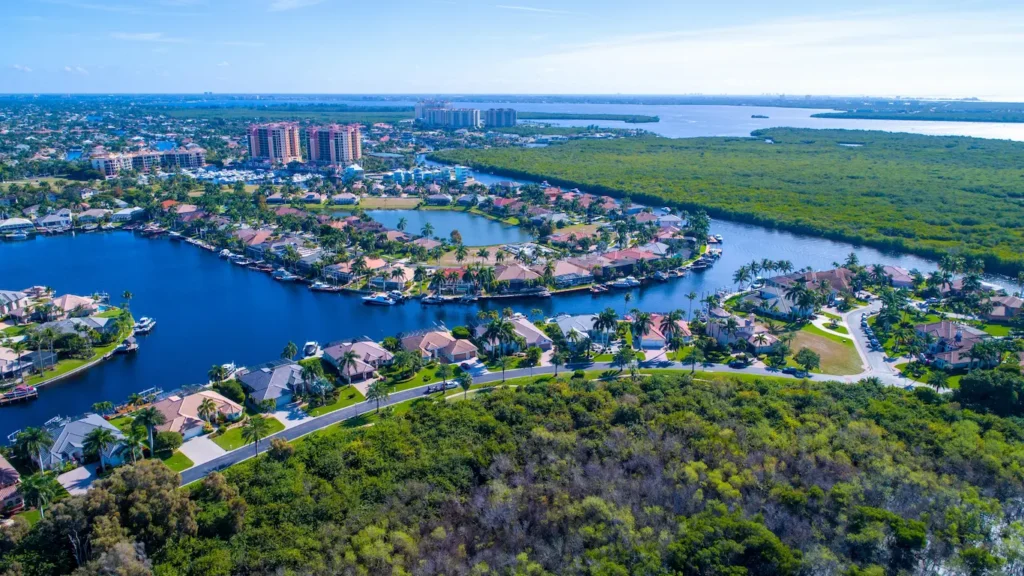
Heavy rains carry lawn treatments directly into our saltwater canals and the Caloosahatchee. We use targeted spot-treatments and buffer zones on waterfront properties to protect your fishing spots without compromising pest control.
Year-Round Pest Pressure
Florida’s mild winters don’t kill off Sod Webworms or Mole Crickets—they simply pause and reload. Without preventative treatment, you’re fighting the same infestation every 60 days.
Comprehensive Lawn Pest Control Services
Southern Chinch Bugs
What You’ll See: Irregular yellow patches that turn straw-brown, typically starting near driveways and sidewalks where heat radiates highest.
Our Solution: We use rotation-chemistry treatments to combat chinch bugs that have developed resistance to over-the-counter pyrethroids. Timing is critical—we treat at the nymph stage before populations explode.
White Grubs (Beetle Larvae)
What You’ll See: Brown patches that peel back like carpet. Increased armadillo or bird activity digging in your lawn.
Our Solution: Sub-surface applications targeting grub feeding zones. We time treatments to coincide with egg-hatching periods (typically May-July in Southwest Florida) for maximum effectiveness.
Fire Ants
What You’ll See: Raised mounds throughout your lawn, particularly after rain. Aggressive ants that swarm when disturbed.
Our Solution: Baiting programs that workers carry back to the colony queen. Unlike topical mound treatments that scatter colonies, our approach eliminates the entire nest. This is particularly important near playgrounds and outdoor living areas.
Tropical Sod Webworms
What You’ll See: Small moths flying in zigzag patterns at dusk. Within days, grass blades appear chewed or scalped.
Our Solution: Targeted applications during the larvae window, before damage becomes visible. We also recommend adjusting irrigation schedules to reduce egg-laying habitat.
Mole Crickets
What You’ll See: Lawn feels spongy underfoot. Small dirt mounds appear overnight. Grass lifts easily like loose carpet.
Our Solution: Sub-surface treatments that penetrate 2-3 inches to reach tunneling crickets. We apply during their nymph stage (late spring/early summer) for maximum effectiveness.
Florida Lawn Disease Prevention
Cape Coral’s humidity and heat create perfect conditions for fungal diseases. Our integrated approach addresses pest damage while preventing common Florida lawn diseases:
Brown Patch (Rhizoctonia)
Circular patches that appear overnight during humid periods. We adjust irrigation recommendations and apply fungicides during high-risk periods (typically October-May).
Gray Leaf Spot
Common in newly-laid St. Augustine sod during rainy season. Our preventative treatments protect vulnerable turf during the June-September vulnerability window.
Take-All Root Rot
Progressive thinning that mimics chinch bug damage. We test soil pH and apply sulfur amendments to correct the alkaline conditions that trigger this disease.
For properties with persistent fungal issues, we coordinate with our termite inspection services to assess whether moisture problems near your foundation are contributing to lawn disease pressure.
Southwest Florida Lawn Challenges We Solve
Lee County Fertilizer Ordinance Compliance
During the June 1 – September 30 blackout period for nitrogen and phosphorus, we switch to micronutrient blends that maintain lawn color without violating county codes. Our pest control treatments remain compliant year-round.
Sandy, Nutrient-Poor Soil
Cape Coral’s soil lacks organic matter and drains rapidly. We apply soil conditioners that help roots dive deeper to resist both drought and pest damage—particularly critical near Burnt Store Road and new construction zones.
Salt Stress from Canal Proximity
Waterfront properties face salt intrusion during king tides and storm surge. We select treatment products that won’t compound salt stress or harm your lawn’s recovery from tidal flooding.
HOA Aesthetic Requirements
Properties in gated communities like Sandoval, Coral Lakes, and Heatherwood Lakes must meet strict aesthetic standards. We coordinate treatments to maintain consistent turf color and density, ensuring your lawn meets community guidelines while staying pest-free.
What to Expect During Your Lawn Pest Control Visit
Step 1: Diagnostic Inspection
Our technicians perform a turf-pull test and soil analysis to identify active infestations. We check irrigation patterns, thatch buildup, and common pest entry points near property edges.
Step 2: Customized Treatment Plan
Based on your pest type, turf variety, and proximity to waterways, we design a treatment protocol. You’ll receive a written plan explaining products, application zones, and expected timelines.
Step 3: Preventative Maintenance
Lawn pest control isn’t one-and-done. We schedule follow-up visits based on Cape Coral’s seasonal pest cycles—typically every 6-8 weeks during peak pressure months. If the pests return between scheduled visits, so do we.
Our Service Area Coverage
Maximum Pest Control serves all Cape Coral neighborhoods and surrounding Lee County communities:
Core Service Zones:
- Northwest Cape (Pelican, Pine Island Road corridor)
- Northeast Cape (Burnt Store Road, new construction areas)
- Southwest Cape (Del Prado Boulevard, Gator Circle)
- Southeast Cape (Sandoval, Coral Lakes, Heatherwood Lakes)
- Yacht Club and waterfront properties
- Matlacha and surrounding areas
We also provide commercial pest control services for Cape Coral businesses with lawn maintenance needs, including HOA common areas, apartment complexes, and office park landscaping.
Related Pest Control Services in Cape Coral
Protect your entire property with our comprehensive pest management solutions:
- Residential Pest Control – Year-round home protection from ants, roaches, spiders, and rodents
- Commercial Pest Control – Health code-compliant treatments for Cape Coral businesses
- Termite Inspection & Treatment – Protect your property investment with preventative termite barriers
Serving Cape Coral, FL | Over 30 Years of Local Expertise
Schedule Your Free Cape Coral Lawn Assessment
Don’t let turf pests turn your property into a dust bowl. Maximum Pest Control delivers the local expertise and environmentally responsible treatments your lawn needs.
Maximum Pest Control
836 NE 7th Terrace, Suite #5 Cape Coral, FL 33909
Call Now: (239) 317-6649
🕐 Hours: Monday-Friday 8am-6pm, Saturday 9am-2pm


Frequently Asked Questions
How do I know if my brown grass is chinch bugs or drought stress?
Pull on the brown grass. If it lifts like a carpet with no roots, you likely have grubs or mole crickets. If it’s firmly rooted but discolored, suspect chinch bugs. Don’t guess—watering a chinch bug infestation just keeps the pests hydrated while your grass dies.
Are your treatments safe for pets and children?
Yes. Once our applications dry (typically 1-2 hours in Cape Coral’s humidity), treated areas are safe for family activity. We use pet-safe protocols because we know Southwest Florida is a dog-loving community.
Does the Lee County Fertilizer Ban affect pest control?
No. The blackout period prohibits nitrogen and phosphorus fertilizer—it does not restrict insecticide applications. We can treat pest issues year-round while using compliant soil amendments during summer months.