
Quick Summary
- Canal-front homes in Cape Coral sit above soil that stays saturated year-round, not just during the rainy season, because of near-constant evaporation from 400+ miles of tidal canals.
- Subterranean termites follow this moisture gradient directly toward foundations, docks, and seawalls, making waterfront properties measurably higher-risk than inland homes.
- A 2026 University of Florida study identified boats at marinas as an emerging vector for invasive Formosan subterranean termites, a specific, underreported risk for Cape Harbour and Yacht Club homeowners.
Yes, canal-front homes in Cape Coral face measurably higher subterranean termite pressure than inland properties, and the reason has everything to do with what’s happening underground, not just in the air.
Cape Coral has more than 400 miles of man-made canals, more canal mileage than Venice, Italy. That’s a remarkable thing to live alongside. It’s also a persistent moisture engine that never fully shuts off, even in February. For subterranean termites, the soil around your canal lot isn’t just damp, it’s a year-round highway.
David Markovits, owner of Maximum Pest Control, has been protecting canal-front homes in Cape Harbour, Yacht Club, and across Lee County for over 30 years. In that time, one pattern has held consistently: waterfront homeowners who understand their specific risk profile protect their investment. Those who rely on general Florida termite advice often find out they were working with the wrong map.
Here’s what that map actually looks like.
How Cape Coral’s Canals Create a Unique Moisture Environment
The Moisture Gradient Nobody Talks About
Cape Coral’s canal system isn’t just scenic, it’s an active hydrological system fed by tidal exchange from the Caloosahatchee River and Charlotte Harbor. Because the canals are slow-moving and brackish, water evaporates from the surface almost constantly. That evaporation recharges the surrounding soil, keeping ground moisture levels elevated well beyond the visible waterline.
What this means for your canal lot: the soil beneath and around your foundation stays significantly wetter than soil just a few blocks inland, not during summer storms alone, but throughout the entire year.
The Dry Season Is When It Gets Interesting
Here’s where most termite content gets it wrong for waterfront properties.
The conventional advice, “termite pressure peaks during Florida’s rainy season”, holds for inland homes. Canal-front homeowners are operating in a different environment. During the dry season, as the surrounding soil loses moisture, termite colonies instinctively migrate toward the remaining wet pockets. Your canal-adjacent soil is one of those pockets. It stays saturated even when the rest of Lee County is in a dry spell.
If you’ve been waiting until after the rainy season to schedule an inspection, you may be timing it exactly wrong for your specific property.
Why Subterranean Termites Are Drawn to Canal-Side Soil
Subterranean termites don’t just eat wood; they require sustained soil moisture to survive. Their colonies depend on humidity to stay hydrated and to maintain the mud tubes they build to travel from the ground to the structure. According to the USDA Forest Service, subterranean termites must maintain continuous contact with moist soil throughout their lifecycle.
Canal-adjacent soil gives them exactly that: a permanent, reliable moisture source with a direct underground pathway toward your home’s wooden structural elements.
On a typical canal lot, the pathway looks like this: saturated soil near the seawall or canal bank → mud tubes built through damp foundation soil → wooden framing, joists, or subfloor. On waterfront properties specifically, your dock, boat lift pilings, and seawall-adjacent landscape timbers are often the first point of contact, exterior wood sources that most standard termite inspections don’t prioritize.
A 2026 University of Florida study added a new dimension to this picture. Researchers found that two highly destructive invasive species, including the Formosan subterranean termite, are spreading faster than previously projected throughout Florida, with boats at marinas identified as a primary transmission vector. For Cape Harbour and Yacht Club homeowners, this is a specific and underreported risk: vessels docking or stored near these active marina communities can introduce new colonies that establish in the surrounding soil and structures.
This isn’t a theoretical concern. It’s a documented, active spread pattern in communities that look exactly like yours.
Warning Signs Canal-Front Homeowners Shouldn’t Ignore
You don’t need to see termites to have a problem. Subterranean termites work through soil and structural wood for months, sometimes years, before visible damage appears. On a canal-front property, watch for these specific indicators:
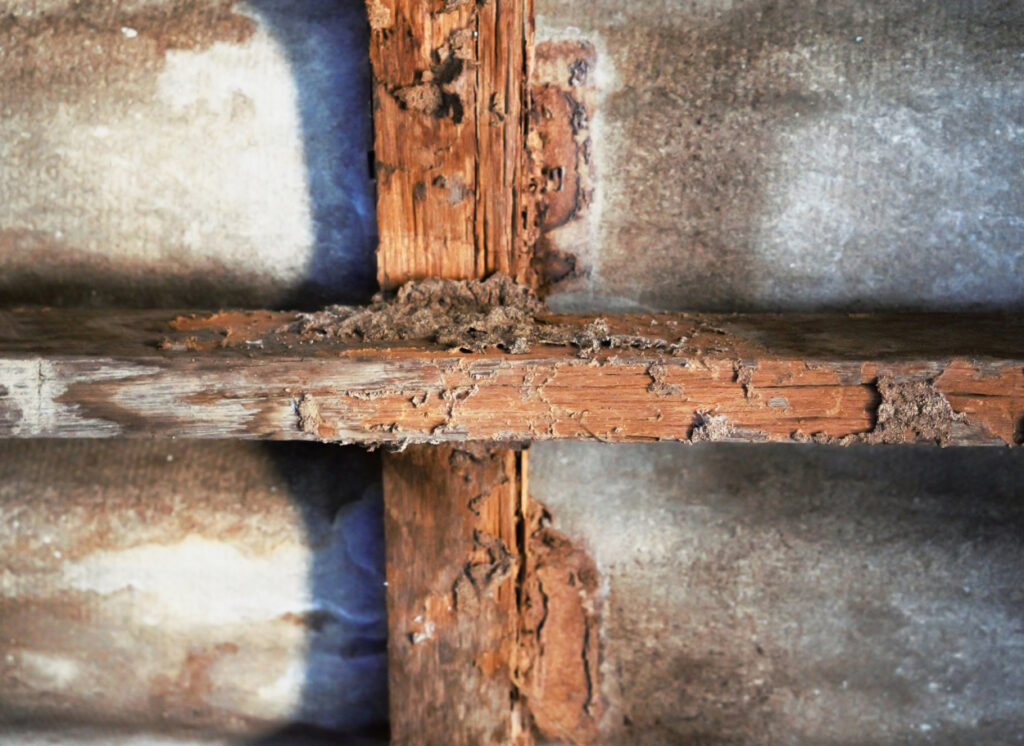
- Mud tubes along your seawall, foundation edges, or concrete pilings, pencil-thin tunnels of compacted soil and debris that termites build to travel between ground and structure
- Hollow-sounding wood on your dock frame, lanai posts, or crawl space members, tap along the surface; a papery echo where there should be solid resistance is a warning sign
- Discarded wings near water-facing doorways or window sills, swarmers shed their wings immediately after finding a nesting site; small piles near canal-facing entry points signal active colony establishment nearby
- Soft, discolored, or visually degraded dock boards or support timbers, especially where wood makes direct or near-contact with pilings or ground
Any one of these near your seawall or dock is a reason to call, not a reason to watch and wait.
Eco-Friendly Termite Protection That Won’t Harm the Waterways
This is a real concern for canal homeowners, and it deserves a direct answer.
Soil barrier treatments, when applied by a licensed technician using EPA-approved products with proper waterway proximity protocols, are designed to remain within the treated soil zone. At Maximum Pest Control, every treatment plan for canal-adjacent properties is specifically calibrated for waterway proximity. The barrier is applied at a distance and depth calculated to protect your foundation without reaching the canal.
You don’t have to choose between protecting your home and protecting the water you live on. Pet-safe and eco-friendly termite treatments are our standard approach for waterfront properties, not an add-on.
This matters to us because it matters to you. You chose a canal lot. The water isn’t scenery; it’s part of your home’s value and your daily life. Treating canal health as an afterthought isn’t something we’re willing to do.
Customized Protection for Cape Harbour and Yacht Club Homes
No two canal lots in Cape Coral are identical. Seawall age, dock construction materials, crawl space depth, foundation type, and the distance between your structure and the waterline all affect how termite risk presents on your specific property.
A Maximum Pest Control waterfront inspection covers all of it: foundation perimeter, dock framing, boat lift contact points, landscape timbers near the seawall, and crawl space or sub-slab access. What we find determines what we build.
Ongoing monitoring matters more for canal-front homes than for inland properties. Because the moisture gradient is persistent, not seasonal, the conditions that attract subterranean termites don’t disappear between treatments. A [comprehensive residential pest protection plan] that includes scheduled re-inspections and monitoring provides the continuous coverage that a one-time treatment alone cannot.
Thirty years of protecting waterfront homes across Lee County has reinforced one consistent truth: the homeowners who never have a serious termite problem are the ones who didn’t wait to find out if they had one.
Protect Your Waterfront Home, Starting with a Free Inspection
Your canal-front home carries a different risk profile than inland properties. The moisture gradient is real, it’s persistent, and it’s exactly the environment subterranean termites are built to exploit. The dry season doesn’t give you relief. Marina activity near Cape Harbour and Yacht Club is now a documented spread vector. And none of this is visible from your lanai.
Contact Maximum Pest Control today for a free waterfront property inspection. David and our team will walk your dock and foundation perimeter with you, assess your specific canal-front risk, and build a customized plan that protects your home and the waterways you love, backed by our satisfaction guarantee: if the pests return, so do we.
Frequently Asked Questions
Do canal-front homes in Cape Coral really have higher termite risk than inland homes?
Yes. Cape Coral’s canal system creates a persistent soil moisture gradient that extends from the waterline into foundation-adjacent soil year-round, including during the dry season, when inland properties get natural relief. Subterranean termites require sustained soil moisture to survive and expand their colonies, making canal-adjacent soil a consistent, reliable resource. Waterfront properties also carry additional entry points, docks, boat lift pilings, seawall timbers, that inland homes simply don’t have.
Are termite treatments safe to use near canals and waterways?
Yes, when applied by licensed technicians using EPA-approved products with appropriate waterway proximity protocols. At Maximum Pest Control, every canal-adjacent treatment is calibrated to protect your foundation without affecting the surrounding waterway. Eco-friendly, pet-safe methods are our standard approach for waterfront properties.
How often should I have my canal-front property inspected for termites?
Annual inspections are the minimum for canal-front homes in Cape Coral. Given that moisture conditions favorable to subterranean termites persist year-round on waterfront lots, and given the 2026 findings on invasive termite spread through marina activity, many Cape Harbour and Yacht Club homeowners benefit from a bi-annual schedule or an ongoing monitoring plan. David can assess your specific property and recommend the right interval based on what he finds.
 What Actually Makes Pest Control Safe for Pets? A Cape Coral Homeowner’s Guide