
Quick Summary
- Brown patches in St. Augustine grass are caused by two very different problems — Southern Chinch Bugs or Brown Patch fungus — and treating the wrong one makes the other one worse.
- Each problem has specific, identifiable clues you can check right now before spending a dollar on chemicals.
- A misdiagnosis isn’t just a wasted purchase — applying insecticide to a fungal lawn can actively accelerate root rot and destroy your turf faster.
Your St. Augustine grass was green last week. Now there’s a spreading brown patch you can’t explain. You’re standing in your yard, hose in hand, wondering what went wrong.
Here’s the thing most Cape Coral homeowners don’t realize: the brown patch in your lawn could be caused by two completely different problems — and the treatment for one will make the other dramatically worse.
That’s not a minor detail. That’s the difference between a lawn that recovers and a lawn that needs to be ripped out and re-sodded.
Let’s get this diagnosed correctly.
Why Getting This Wrong Is Costly (and Common)
When grass starts dying, the instinct is to grab a product off the shelf and spray. We understand it — watching your lawn deteriorate is stressful, especially when you’ve invested in your property.
But here’s what we see happen all the time in Cape Coral: a homeowner applies a broad-spectrum insecticide to a lawn that’s actually suffering from Rhizoctonia solani — the fungus that causes Brown Patch disease. The insecticide does nothing to stop the fungus. Worse, some formulations disrupt the soil’s beneficial microbial balance, which accelerates the root rot already underway.
The same goes in reverse. If you’re battling a chinch bug infestation and you apply a fungicide, you’ve fed the problem time and time again for those insects to keep injecting their phytotoxic saliva and choke off your turf’s water supply.
The fix starts with an accurate diagnosis. Here’s how to do it.
What Southern Chinch Bug Damage Looks Like
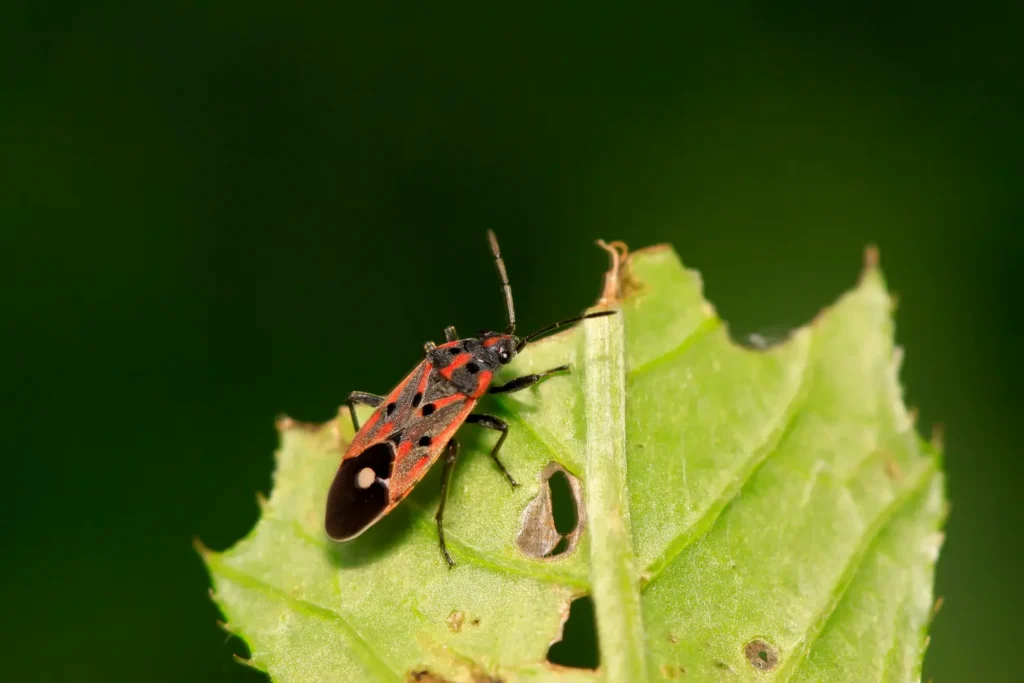
Southern Chinch Bugs are tiny — barely an eighth of an inch — but the damage they cause is anything but small. They thrive in Cape Coral’s hot, dry conditions, and they tend to strike first in the spots that stress your turf the most: along sidewalks, driveways, and sun-baked edges where heat radiates up from the pavement.
Here’s what you’ll notice:
- Irregular, spreading yellow-to-brown patches that expand outward from sunny, dry areas
- Grass that looks drought-stressed even when you’re watering consistently
- Damage that worsens during summer heat spikes, not after rain events
The most reliable confirmation is the float test (sometimes called the coffee can test). Push an open-ended tin can about two inches into the soil at the edge of a damaged area, fill it with water, and watch for 5–10 minutes. If chinch bugs are present, you’ll see tiny black-and-white insects floating to the surface. It’s simple, free, and definitive.
Chinch bugs work by injecting a phytotoxic saliva directly into the grass blade — think of it like blocking the plant’s vascular system. The grass can’t transport water or nutrients, so it dies from the inside out, even if your irrigation is running perfectly.
What Brown Patch Fungus Looks Like
Brown Patch is a different beast entirely, and it plays by completely different rules. This fungal disease — caused by Rhizoctonia solani — loves cool, wet, humid conditions, which means Cape Coral’s wet season (June through September) is prime time for an outbreak, especially in lawns that are over-irrigated or have poor drainage.
Look for these signs:
- Circular or roughly circular dead zones, often with a slightly sunken appearance
- A tan or bronze “smoke ring” border around the edge of the damaged area (most visible in the early morning)
- Grass blades that show tan lesions with a darker brown border on the leaf itself
- The critical tell: grab a handful of grass at the edge of the dead zone and pull. If the blade slides easily out of the sheath at the base, that’s fungal rot — not insect damage.
That “pull test” is your single fastest diagnostic tool for Brown Patch. Chinch bug damage leaves the plant structurally intact at the base. Fungal rot destroys the leaf sheath, so the blade detaches with almost no resistance.
The Thatch Problem: Where Both Threats Hide
Here’s a detail that surprises a lot of homeowners: excessive thatch is the common thread that makes both problems worse.
That dense layer of organic matter between your grass blades and the soil surface does two damaging things simultaneously. It provides a warm, protected overwintering habitat for chinch bug populations. And it traps moisture against the crown of the plant, creating exactly the humid microenvironment that fungal spores need to germinate and spread.
Managing thatch through proper integrated pest management strategies isn’t just good lawn hygiene — it’s one of the most effective preventative steps you can take to protect your St. Augustine turf year-round.
The Fertilizer Trap: Don’t Make This Mistake
When grass starts yellowing, many homeowners reach for a nitrogen-heavy fertilizer. It makes intuitive sense — feed the stressed plant and help it recover.
If you have Brown Patch, this is one of the worst things you can do.
Nitrogen is essentially fuel for Rhizoctonia solani. A fertilizer application during an active fungal outbreak can cause the disease to spread across your entire lawn in days. If you’re not certain what you’re dealing with, hold off on any fertilizer until the root cause is confirmed.
This is exactly why we say, “Didn’t just spray and pray” is the standard we hold ourselves to. Every service starts with a thorough inspection — because the right product applied to the wrong problem isn’t pest control. It’s damage control.
Side-by-Side: The Quick Diagnostic Reference
| Southern Chinch Bugs | Brown Patch Fungus | |
| Shape of damage | Irregular, expanding outward | Circular or semi-circular |
| Preferred conditions | Hot, dry, sunny | Cool, wet, humid |
| Where it starts | Edges near pavement | Any area; spreads in rings |
| Pull test result | Blade stays rooted | Blade slides out easily |
| Confirmation test | Float/coffee can test | Smoke ring border at dawn |
| Worsens with | Drought stress | Overwatering, high nitrogen |
Can You Have Both at the Same Time?
Yes — and it’s more common than you’d think. A lawn weakened by chinch bug damage has compromised turf density, which creates the kind of stressed, thin grass that’s more vulnerable to fungal invasion. If you’re seeing both irregular spreading patches and circular dead zones, or if the damage doesn’t fit cleanly into one category, don’t guess.
This is where a professional on-site inspection makes all the difference. We’ve been identifying exactly these kinds of overlapping issues in Cape Coral lawns for over 30 years, and we know the local conditions — the humidity patterns, the soil types, the specific pressures that Southwest Florida’s wet season puts on Floratam St. Augustine — in a way that a general guide simply can’t replicate.
Conclusion & Next Steps
If your St. Augustine grass is turning brown, the most important thing you can do right now is slow down before you treat.
Walk the damage pattern. Do the pull test. Try the float test. Look at when the damage appeared relative to recent weather — hot and dry points toward chinch bugs; cool, rainy, and humid points toward fungus.
If you’re still not sure — or if the damage is spreading fast — don’t risk an expensive misdiagnosis. Our team at Maximum Pest Control offers free, zero-pressure on-site diagnostic inspections for Cape Coral homeowners. We’ll identify exactly what’s attacking your lawn, explain the root cause clearly, and build a customized treatment plan using EPA-approved, eco-friendly products that are safe for your family and pets.
We believe in protecting your property investment — not just treating symptoms.
Contact us today to schedule your free Cape Coral lawn inspection. No surprise charges, no pressure. Just answers.
Frequently Asked Questions
Why does my St. Augustine grass pull up easily at the roots when it turns brown?
If your grass blades slide out of the sheath at the base with little resistance, that’s a strong indicator of Brown Patch fungus (Rhizoctonia solani), not insect damage. The fungus decays the leaf sheath — the base where the blade connects to the stem — causing it to detach easily. Chinch bug damage, by contrast, leaves the plant’s base structurally intact even as the blade dies. This “pull test” is one of the fastest and most reliable field diagnostics available.
Does applying fertilizer make a brown patch fungal infection worse?
Yes — significantly. Nitrogen fertilizer acts as a food source for Rhizoctonia solani, the pathogen responsible for Brown Patch. Applying a high-nitrogen product during an active fungal outbreak can cause the disease to spread rapidly across your entire lawn. If you suspect Brown Patch, hold all fertilizer applications until the infection is confirmed and treated. A licensed lawn care professional can advise on safe re-fertilization timing once the fungus is under control.
Why do chinch bugs tend to attack the grass near sidewalks and driveways first?
back up into the turf, creating micro-zones of elevated temperature and reduced soil moisture — exactly the conditions chinch bugs prefer. These edge areas are also often the last to receive even irrigation coverage. If you notice browning that starts at the pavement edge and spreads inward, chinch bugs should be your first suspect.
 Your CBS Home Isn’t Termite-Proof — Here’s What’s Actually Happening Inside Your Walls